
Ever find yourself wide awake at 3 a.m., sheets soaked, heart racing, wondering what happened to the person who used to sleep like a rock? You’re not imagining it, and you’re definitely not alone. Sleep struggles are one of the most common and most frustrating symptoms of perimenopause and menopause. In fact, studies show that as many as around 60% of women say they have sleep problems during this transition, like it’s almost inevitable or so.
So why does this happen? And more importantly, what can you actually do about it? Let’s dig in.
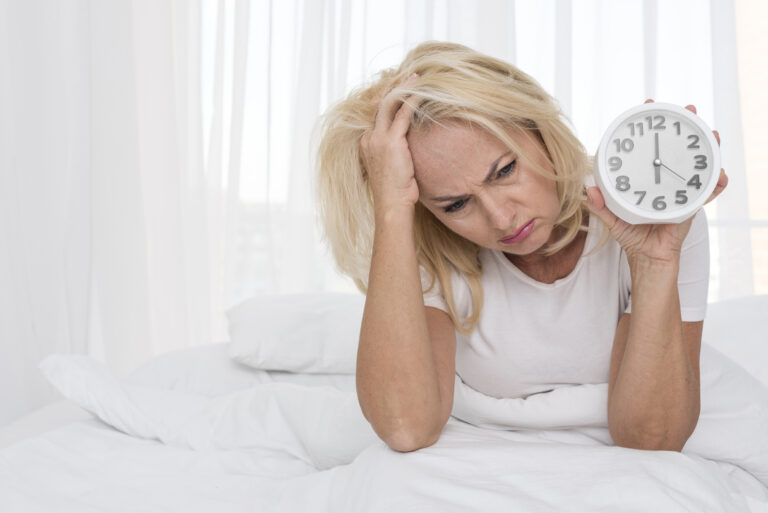
Your sleep isn’t just about being tired. It’s basically controlled by this delicate balance of hormones, and when menopause shows up, it throws the whole balance off, like completely.
Estrogen is huge for regulating body temperature and for supporting deep, restorative sleep. As estrogen levels drop, your internal thermostat gets glitchy, which is exactly why hot flashes and night sweats show up right when you’re trying to drift off.
Progesterone is another key player. Often called nature’s calming hormone, progesterone has a mild sedative effect. As levels decline during perimenopause, that natural “wind-down” signal weakens, making it harder to fall and stay asleep.
Together, these hormonal shifts do a domino thing: lower estrogen equals hot flashes; lower progesterone means less of that calm feeling, and then the whole night gets fragmented and restless, like you never fully land asleep.
Let’s be real about it, the bedroom elephant. Hot flashes don’t only show up in the day. The nighttime version of night sweats is one of the most common reasons sleep gets worse during menopause.
So what’s happening for real is that as estrogen moves around, your hypothalamus, which is basically your body’s internal thermostat, starts acting extra jumpy and hypersensitive to little temperature changes. This triggers a sudden heat surge, followed by sweating and a racing heart, jolting you awake even if you don’t fully remember it in the morning.
The result? Even if you technically get seven or eight hours in bed, the quality of that sleep takes a major hit.
Menopause doesn’t happen in a vacuum. This phase of living often kind of overlaps with major stressors like aging parents, career pressure, teenagers, or even that emotional burden that comes with the whole transition itself. Add anxiety or low mood into the mix, and your brain has an even harder time switching off at night.
Cortisol, your body’s main stress hormone, tends to spike more easily during perimenopause. And when cortisol is high, melatonin (your sleep hormone) often takes a back seat. This is why so many women describe feeling “tired but wired” at bedtime.
Here’s something that doesn’t get talked about enough: menopause increases the risk of sleep apnea. Before menopause, estrogen and progesterone help keep the airway muscles toned. Once those hormone levels drop, the airway becomes more likely to collapse during sleep, leading to snoring, gasping, or full-blown sleep apnea.
Because sleep apnea symptoms can overlap with normal menopause fatigue, it often goes undiagnosed in women. If you’re waking up exhausted no matter how much you sleep, or your partner mentions loud snoring, it’s worth bringing up with your doctor.
The good news? You have more control over this than you might think. Here’s what tends to make the biggest difference.
Keep your bedroom cool. Since temperature regulation is already disrupted, a cooler room (around 65 degrees Fahrenheit) can help minimize night sweats and hot flashes.
This phase of living often kind of overlaps with major stressors like aging parents, career pressure, teenagers, or even that emotional burden that comes with the whole transition itself.
Watch your caffeine and alcohol intake. Both can worsen hot flashes and disrupt sleep architecture, even if a glass of wine feels relaxing in the moment.
Move your body during the day. Regular exercise, mainly in the earlier part of the day, seems to boost sleep quality and kind of helps to steady stress hormones in a more regular way. It’s like your body gets the right rhythm or something, and you end up resting better, even if you were a bit tense before.
Consider hormone replacement therapy (HRT). For many women, HRT can significantly reduce hot flashes and night sweats, which in turn improves sleep. This is a conversation worth having with your doctor.
Talk to a doctor about cognitive behavioral therapy for insomnia (CBT-I). That kind of structured, evidence-based approach is seen as one of the most effective long-term treatments for menopause-related sleep troubles; it can even do better than sleep medication more often than people expect.
Sleep changes during perimenopause and menopause aren’t a sign that something is “wrong” with you. They’re a natural, hormone-driven shift that millions of women experience. That said, “natural” doesn’t mean you have to just push through it. Between lifestyle tweaks, medical routes like HRT, and evidence-based treatments such as CBT-I, there are legit, real, effective ways to get back your sleep again.
If restless nights have become your new normal, don’t brush it off. Talk to a healthcare provider who understands menopause and can help you build a plan that actually works for your body.
1.Why do I wake up at the same time every night during menopause?
This tends to be tied to hormone fluctuations, especially those drops in estrogen that can set off hot flashes, or even just a subtle temperature shift. Then again, cortisol rhythms may matter too, since they can make your body wake up or rouse at a pretty consistent point in its sleep cycle, like sort of on schedule.
2. Do night sweats ever go away?
For many women, night sweats improve as hormone levels stabilize in postmenopause, though timelines vary widely. Some women notice an improvement in a couple years, while others drag it out and have symptoms longer, kind of like that annoying, always-kind-of-here feeling.
3. Is melatonin safe during menopause?
In most cases melatonin is seen as safe for short-term use, but it’s smart to check in with a doctor first, especially if you’re taking other medications or if your sleep problems are more complicated, for instance, sleep apnea.
4.Can menopause mess with sleep even if there are no hot flashes?
Yes. The hormone shifts can throw off sleep patterns right away, and feelings like increased worry or mood changes during the transition can also fuel insomnia. So yeah, it can happen without those classic hot flashes too.
5.Should you get a sleep study during menopause?
If you have loud snoring , or you wake up gasping, or you feel persistently wiped out even after enough time in bed, then a sleep study can be useful. It helps rule out or confirm sleep apnea, which tends to show up more often after menopause.
6.Does HRT really help with sleep quality?
For a lot of women, yes, snoring and T reduce night sweats and hot flashes; it often improves sleep continuity and overall quality, kind of indirectly but still noticeably. Still, results vary, so it’s best to talk through your exact symptoms and health history with a provider.
7.How long do menopause-related sleep issues usually last?
It depends a lot on the person, but many women have hot flashes and sleep problems throughout perimenopause and into the first few years after menopause noticeably. e. Things can get better as hormone levels settle down and stabilize.